

Malaysia CRM Software That Fits How Businesses Actually Sell
Most local businesses already know they need Malaysia CRM software. What they don’t know, until they’ve paid for one and watched adoption collapse within 90 days, is that most CRM systems were not designed for how Malaysian businesses actually sell.
The pipeline looks healthy with 32 open deals across seven reps. Stages are moving and the dashboard is green. Then the quarter closes and the sales director starts making calls. Half the “deals” are WhatsApp conversations from three months ago that the rep meant to follow up on.
Two accounts were marked as visited in the CRM, but nobody documented what happened there. One prospect has been in “proposal sent” for 11 weeks with no update because the rep assumed their manager was handling the follow-up.
The CRM captured the activity. It missed the relationship. And in Malaysia, the relationship is the sale.
Why Most CRM Software Misreads the Malaysian Sales Process
Standard CRM architecture assumes a particular sales model: cold outreach, structured email sequences, linear pipeline progression, inside sales reps working from a desk. That model was built for Silicon Valley software companies and American B2B sales floors. It was then exported globally, feature by feature, pricing tier by pricing tier, with minimal adjustment for markets where sales relationships develop completely differently.
The Malaysian sales process is relationship-first, trust-driven, and deeply contextual. A distributor relationship in Johor Bahru might take six months of regular visits, meals, and WhatsApp check-ins before a formal proposal is appropriate. A referral from a mutual contact in a Chinese business association in Penang can compress a three-month sales cycle into three weeks. A Malay entrepreneur network introduction carries more commercial weight than any cold email ever could.
None of this fits neatly into a CRM pipeline stage describing a Western inside-sales journey: Lead > Qualified > Proposal Sent > Negotiation > Closed. CRM software for Malaysian businesses that forces sales reps to map their relationship-building activities onto these stages produces a pipeline that looks structured and tells almost nothing true about where deals actually stand.
The result is familiar to most Malaysian sales managers. CRM data becomes difficult to trust, and sales reps update records only after the fact. As a result, coaching conversations rely more on intuition than on evidence.
Also read: Best Low-Cost CRM Solutions for Small Business in Malaysia
Where Malaysian Sales Relationships Actually Live and Why CRM Keeps Missing Them

Malaysia has one of the highest WhatsApp adoption rates globally, with over 24 million active users. For Malaysian sales teams, WhatsApp is not a communication channel. It is the primary sales environment. On this messaging platform, reps initiate relationships, discuss deals, follow up on opportunities, and make commitments.
And almost none of it gets into a CRM.
A rep who has 40 active WhatsApp conversations with prospects and clients has 40 active sales relationships that are completely invisible in the pipeline dashboard. When that rep leaves or when their phone breaks, those relationships leave with them. The company has been paying for a CRM that captured a fraction of its actual sales activity, and nobody noticed until the number walked out the door.
WhatsApp CRM Malaysia integration is one answer: tools that capture WhatsApp conversations and log them against customer records. But it addresses a symptom rather than the root cause. The deeper problem is that most Malaysia CRM software was never designed around the way Malaysian trust-based selling actually works.
Understanding Malaysia’s Relationship-Based Sales Culture
Malaysia’s sales culture is not uniform. It operates across three major business communities with distinct relationship dynamics.
Chinese business networks. The Chinese Chamber of Commerce chapters, the guild associations, the alumni networks from Chinese-medium schools operate on an elaborate system of guanxi that predates modern CRM by centuries. Trust is earned through demonstrated reliability in small transactions before large ones, through introductions from trusted intermediaries, through the visible alignment of values. A Malaysian sales CRM that reduces this to a pipeline stage misses what’s actually driving the deal.
Malay business networks. Bumiputera entrepreneur associations, government-linked procurement networks, community and religious organisation connections operate on a different but equally relational logic. The ability to navigate these networks, demonstrate respect for cultural protocols, and build genuine relationships within them is a sales skill that no CRM teaches and few CRMs capture.
Indian business communities. The trade associations, the professional networks, the family business ecosystems similarly operate through trust and referral systems that have nothing to do with structured outreach and everything to do with personal credibility.
Malaysian SMEs contribute 38.4% of GDP and employ 48.2% of the workforce. The majority of this economic activity runs through these relationship networks, not through the linear sales funnels that most cloud CRM software in Malaysia assumes.
Also read: Sales Geofencing Malaysia to Prevent Fake Check-ins
What Malaysia CRM Software Should Actually Do Differently

Five capabilities distinguish Malaysia CRM software from other generic ones:
It must work from a phone, not a desk
Malaysian sales reps are in the field. They visit distributors in Shah Alam, retailers in Subang Jaya, and corporate prospects in Cyberjaya in a single day. A CRM that requires desktop access to log visits, update pipeline stages, or check client history is a CRM that gets updated on Friday afternoon from memory. Mobile CRM Malaysia is not a feature preference. It is the minimum viable requirement for a system that will actually be used.
It must capture visits, not just stages
The most important commercial event in a Malaysian sales cycle is the in-person visit, such as the teh tarik, the site tour, the formal presentation, the follow-up meeting.
A CRM for field sales Malaysia that records what happened during a visit, who was present, what was discussed, what was committed to, and how long the meeting lasted captures the relationship intelligence that pipeline stages cannot. When the next rep visits the same account, they should know everything that happened before. When the manager reviews the account, they should see a complete history of every interaction, not a series of pipeline stage transitions.
It must make updating easier than not updating
The fastest path to CRM abandonment is friction. If logging a visit takes longer than the visit itself, reps will stop logging visits. Affordable CRM Malaysia solutions that win adoption are the ones that reduce the documentation burden to its minimum. GPS verifies the check-in, the rep completes a few structured fields, captures a client signature, and moves on. The rep who can complete a visit log in 90 seconds in a parking lot will complete every visit log. The rep who faces a five-minute form will complete approximately none.
It must connect activity to pipeline, not treat them as separate systems
The intelligence gap in most Malaysian sales operations is the disconnection between what happened in the field and where the deal stands in the pipeline. A visit gets logged. A pipeline stage gets updated. Nobody connects them. The result is activity data and pipeline data that exist in parallel but never inform each other. Sales pipeline software Malaysia closes this gap by linking every documented visit to a specific customer record and deal stage. As a result, both sales reps and managers gain a complete view of the relationship and its commercial trajectory.
It must be priced for Malaysian SMEs, not American enterprises
Affordability is only part of the equation. Malaysian businesses need CRM software that delivers value at every stage of growth, without forcing them to pay for features they will never use. The most effective Malaysia CRM software balances functionality, usability, and pricing in a way that remains practical as teams expand.
Also read: Best Operations Management Software for Branch in Malaysia
The Mobile Advantage: Why Field-First CRM Wins in Malaysian Sales
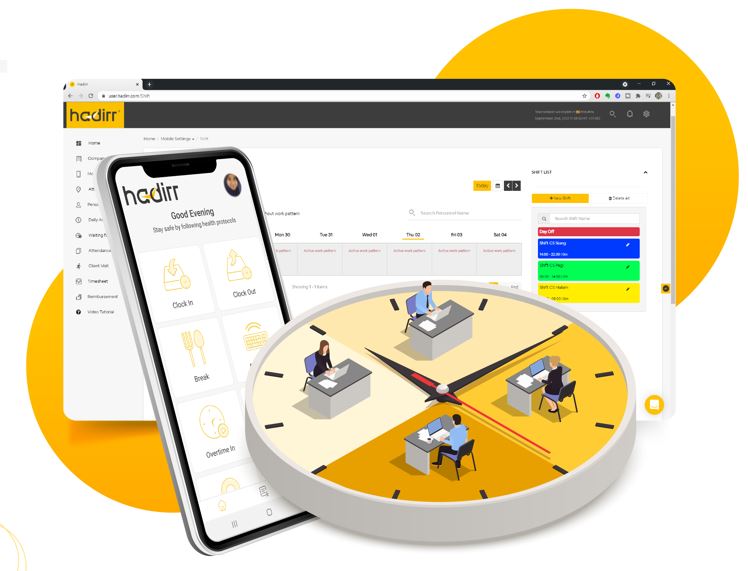
The data is unambiguous. Businesses using mobile CRM are 150% more likely to exceed their sales goals. The mechanism is straightforward: when CRM is accessible from a phone, reps update it in real time. Real-time updates produce accurate data. Accurate data produces better coaching, better forecasting, and better account management decisions.
In Malaysia, this advantage is amplified by the nature of the sales environment. A CRM for Malaysian sales teams that functions seamlessly on an Android phone, whether offline when connectivity is inconsistent or fast when it is available, removes the single largest barrier to adoption that Malaysian field sales teams face.
The alternative is a CRM that works well on a desktop and only tolerably on a phone. This often leads to a pattern that every Malaysian sales manager recognises: the Friday afternoon catch-up session, where sales reps update three weeks of pipeline activity from memory, with accuracy declining sharply for each day that has passed.
Field-first CRM doesn’t just improve adoption. It improves the quality of the data that adoption produces because the rep who logs a visit immediately after it happens remembers what was said, what was promised, and what the client’s actual sentiment was. That intelligence, captured in real time, is what makes the difference between a pipeline that reflects commercial reality and one that reflects what reps remembered on Friday.
Malaysia CRM software that works for Malaysian sales culture is:
- mobile-first because Malaysian sales reps are mobile
- capturing visits because visits are where Malaysian relationships are built and deals are advanced
- connecting field activity to pipeline because that connection is where commercial intelligence actually lives
- simple enough to use between client visits.
Also read: Field Sales App: Improve Adoption, Visibility, and Team Performance
How Hadirr Sales Works as Malaysia CRM Software

Hadirr Sales was designed for the operational reality of Malaysian field sales: mobile workforces, relationship-driven selling, visit-heavy pipelines, and teams that need CRM to fit their day rather than the other way around.
When a rep arrives at a distributor in Petaling Jaya, the visit workflow completes on one screen. GPS-based mobile attendance confirms the location, the client record surfaces with one tap, reps log meeting notes and follow-up actions in structured fields, and the phone saves digital signatures. The pipeline stage updates. The visit is documented. Total time: under two minutes before the meeting starts.
That visit record doesn’t sit in isolation. It connects directly to the client’s full relationship history, including every previous visit, every commitment made, and every follow-up logged. The next rep who visits this account walks in knowing everything that happened before. The sales manager reviewing the account sees more than a pipeline stage and a date. They see a narrative of a developing commercial relationship.
For the sales manager, the pipeline view that emerges from genuine field documentation is qualitatively different from one built on Friday afternoon catch-up sessions. Territory gaps are actual gaps, not documentation gaps. Stalled deals reflect real commercial friction, not forgotten updates. Coaching conversations become more specific.
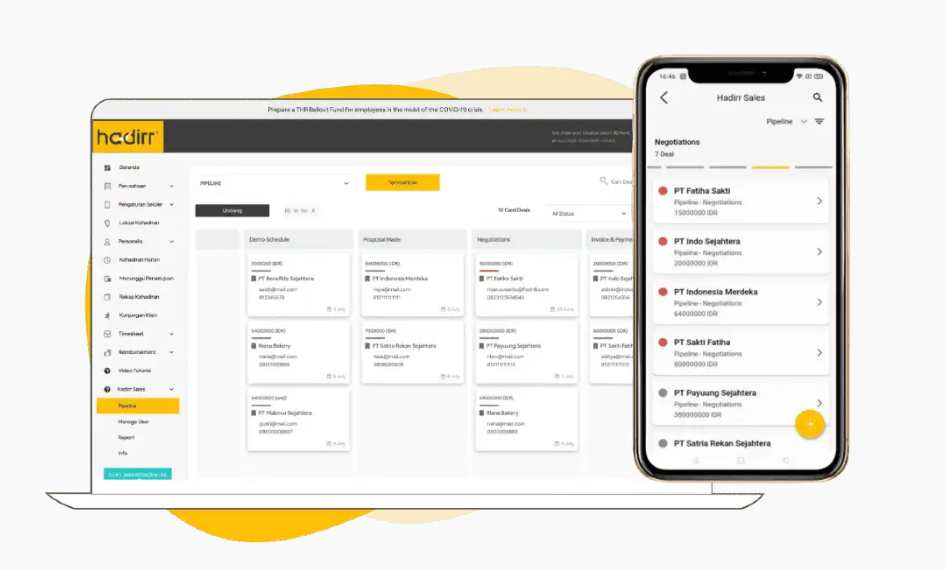
Hadirr Sales, a field-team tracking and CRM platform, supports companies across Southeast Asia, where field-intensive selling is the commercial model and mobile-first technology is the only kind that actually gets used. Its pricing is built for Malaysian SMEs, with additional users scaling at rates that don’t create budget pressure as teams grow.
Explore Hadirr and see what your pipeline looks like when every customer interaction is captured as it happens.