

Best Shift Scheduling Software for SEA Operations Teams
At 11 pm, a WhatsApp message arrives. Two workers won’t make the night shift at a manufacturing facility in Karawang. The floor supervisor has forty minutes to find replacements, reconfigure the line, and document the change before the shift starts. The shift scheduling software their company uses? A shared Excel file and a group chat.
What follows will feel familiar to any operations manager running rotating shifts across Southeast Asia. Phone calls to off-duty workers. Informal overtime agreements that may or may not get documented properly. A shift that starts late, understaffed, with two people working their second consecutive shift and no clean record of how the change happened.
This is not a people problem. It’s a scheduling infrastructure problem. And the right shift scheduling software eliminates it before it starts.
Why Rotating Shift Scheduling Breaks Operations Teams

Rotating shifts create operational complexity that fixed-schedule workforces never encounter. The problems compound across three dimensions simultaneously.
Last-minute absences cascade
In a fixed-schedule office, one absent employee creates a gap. In a rotating shift operation—a factory running three shifts, a logistics hub operating around the clock, a hospitality property covering morning, afternoon, and night—one absence triggers a chain reaction.
Someone must cover—and that worker may already be near their weekly hour limit. The supervisor improvises. Overtime accumulates without approval. The next shift starts with a fatigued replacement and incomplete documentation.
Scheduling errors create compliance exposure
Indonesia’s Labor Law specifies maximum overtime hours and mandatory rest periods between shifts. Malaysia’s Employment Act mandates minimum rest intervals and limits consecutive working days. Singapore’s Employment Act sets daily and weekly hour caps.
Operations teams that build shift rosters manually—or adjust them informally via WhatsApp—routinely create schedules that violate these requirements without realizing it. The violation surfaces only when a worker files a claim or an audit requests shift records.
Manual rosters don’t scale
A fifteen-person team running two shifts is manageable in a spreadsheet. A sixty-person team running three rotating shifts across two locations is not. As operations scale, manual roster management consumes disproportionate supervisor time, produces errors that require correction, and creates version control problems where nobody is certain which roster is current.
The right shift scheduling software addresses all three dimensions—not just the roster display, but the entire workflow from schedule creation through absence management, shift swaps, overtime approval, and compliance documentation.
Also read: Top Sales Management Software for Indonesian Businesses
When Shift Scheduling Errors Start Hitting Operational Costs
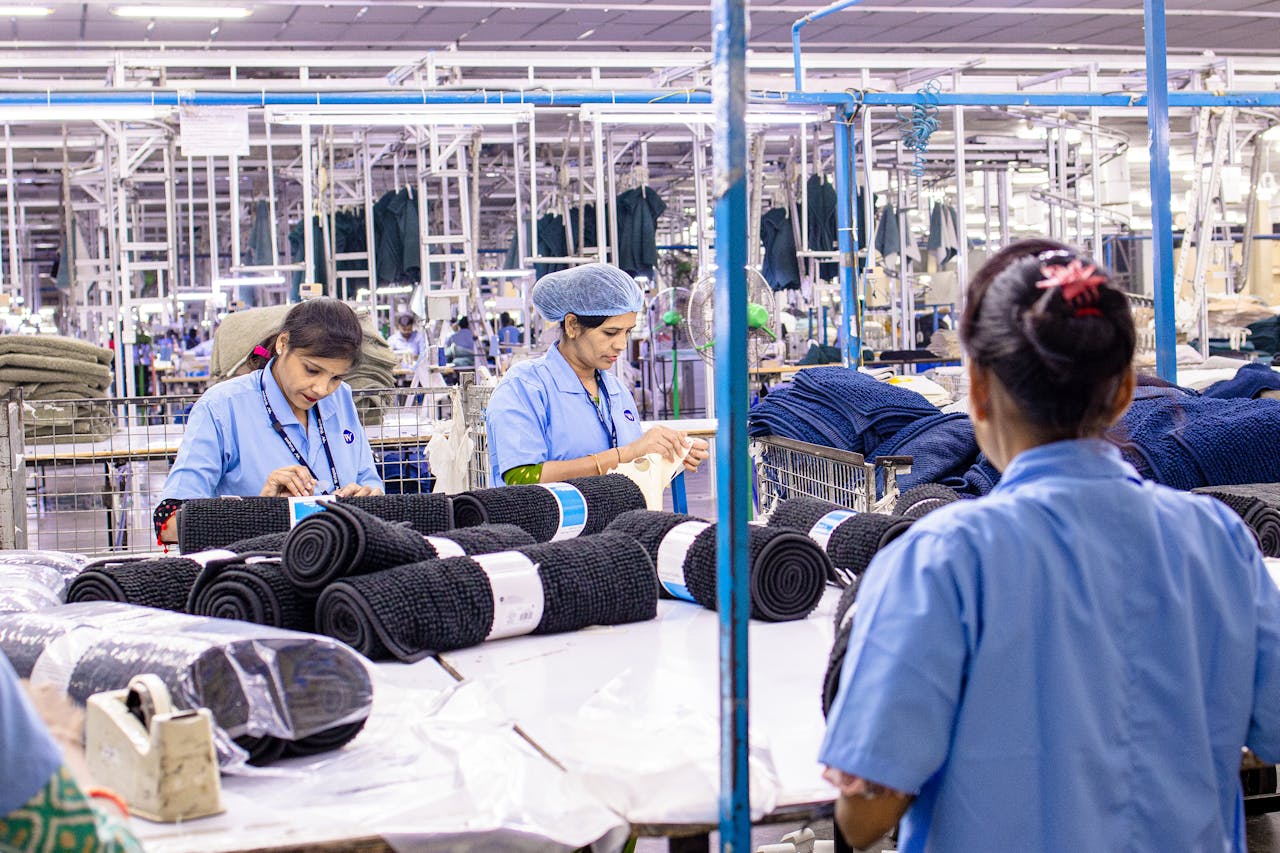
Shift scheduling problems don’t just create operational friction. They quietly drive up labor costs while reducing output at the same time.
Understaffed shifts slow everything down. Production targets slip in manufacturing, shipments get delayed in logistics, and service quality drops in hospitality. To compensate, supervisors rely on last-minute overtime—often at higher cost and with lower productivity from fatigued workers.
Overstaffed shifts create a different kind of loss. Too many workers on the same shift leads to idle time that doesn’t show up as a problem on the surface—but steadily erodes margins over time. Labor cost increases without a corresponding increase in output.
More subtle, but just as damaging, is workload imbalance. When shift allocation doesn’t match actual demand, some teams operate under constant pressure while others are underutilized. Over time, this leads to burnout, higher turnover, and inconsistent performance across shifts.
These issues rarely appear as a single major failure. Instead, they accumulate quietly—week after week—until labor costs rise, productivity drops, and operations teams are left trying to explain gaps they can’t easily trace back to scheduling decisions.
Also read: Best CRM Software in Malaysia for SMEs (2026 Guide)
What Shift Scheduling Software for Operations Teams Should Actually Handle

Operations teams across Indonesia need workforce scheduling software that handles more than roster display. Five capabilities separate genuinely useful shift scheduling software from tools that work for desk-based teams but break down on the factory floor or logistics hub.
Flexible shift pattern configuration
Operations rarely run uniform shifts. A manufacturing facility in Batam might run morning, afternoon, and night shifts with different headcount requirements for each. A hospitality property in Bali runs different rosters for weekdays, weekends, and public holidays. A logistics hub in Port Klang adjusts shift patterns based on shipment volume. The right software configures shift patterns with genuine flexibility—individual or group assignments, rotating schedules that apply automatically, and pattern changes that propagate without manual re-entry.
Real-time absence management with substitution workflows
When a worker calls in sick minutes before the shift starts, the supervisor needs to find a replacement immediately. Shift scheduling software must show available workers in real time—who are off-shift, who have the right skills for the role, who haven’t yet hit their weekly hour limit. The substitution request routes through the system. The replacement confirms via mobile. The change logs automatically. What used to be a last-minute scramble becomes a three-minute workflow.
Overtime visibility and pre-approval
Unplanned shift coverage drives overtime—and uncontrolled overtime drives cost and compliance risk simultaneously. Software that shows each worker’s accumulated hours in real time—before assigning a substitution—prevents supervisors from inadvertently scheduling workers past legal limits. Pre-approval workflows ensure overtime gets authorised before it’s worked, not discovered at month end.
Mobile-first design for floor-level workers
Operations teams don’t work from desks. A shift scheduling tool that requires a laptop to view rosters, confirm shifts, or submit swap requests fails on the factory floor. Workers need to check their roster, receive shift change notifications, and confirm assignments from a phone—ideally in Bahasa Indonesia, Bahasa Malaysia, or English depending on location.
Audit-ready shift records
Every shift assignment, every change, every substitution, and every overtime approval must generate a timestamped record that survives a compliance audit. When the Indonesian Manpower Office, the Malaysian Labour Department, or Singapore’s MOM requests shift documentation, the system produces it immediately—not after a week of reconstructing chat logs and spreadsheet versions.
Also read: A Foreign Business Guide to Indonesia’s Product Certification
Best Shift Scheduling Software for Operations Teams in Southeast Asia

These tools handle rotating shift complexity for distributed operations across the region. Each fits a different operational context.
When I Work
A strong fit for hospitality, retail, and food service operations running multi-shift schedules. When I Work handles roster creation, shift swaps, and availability management with a clean mobile interface. Its strength is consumer-grade usability—workers adopt it quickly. The limitation for SEA operations: it’s built for Western markets and lacks the local compliance awareness and offline capability that Indonesian and Malaysian field operations require.
Deputy
A credible shift management app for Malaysia and Singapore operations. Deputy is built specifically for shift-based workforces across hospitality, logistics, and healthcare. Deputy handles multi-location rostering, availability management, and time and attendance in one platform. Its compliance tools align with Australian and UK regulations—less so with Indonesian and Malaysian labor law specifics. A credible option for Singapore operations or regionally-headquartered teams that manage compliance centrally.
Shiftboard
Designed for enterprise operations teams—manufacturing, healthcare, security services—with complex scheduling requirements. Shiftboard handles rotating patterns, skills-based scheduling, and compliance rule sets for complex enterprise environments. The tradeoff is implementation complexity and pricing that targets large operations rather than mid-sized regional businesses.
Connecteam
A mobile-first workforce management platform that covers scheduling, communication, and time tracking. Works well for deskless teams and handles basic shift management effectively. Less specialised than purpose-built scheduling tools for complex rotating shift patterns, but a reasonable fit for smaller operations teams that need scheduling alongside broader workforce communication features.
Hadirr
Built for Southeast Asian operations teams that need mobile attendance verification, flexible shift scheduling, and overtime management in one connected platform—with local compliance awareness across Indonesia, Malaysia, and Singapore. Instead of treating scheduling as a standalone feature, Hadirr connects these workflows into one system. That matters in environments where shifts change frequently and every change has compliance implications.
It’s designed for mobile-first use, supports offline scenarios, and aligns with how operations teams actually work on the ground—not just how schedules look on a dashboard.
Also read: Best Remote Sales Monitoring and CRM Tools in Singapore
How Hadirr’s Shift Scheduling Software Handles Rotating Operations Across SEA

Picture the same situation—but this time, the supervisor has Hadirr.
From Absence to Replacement in Minutes
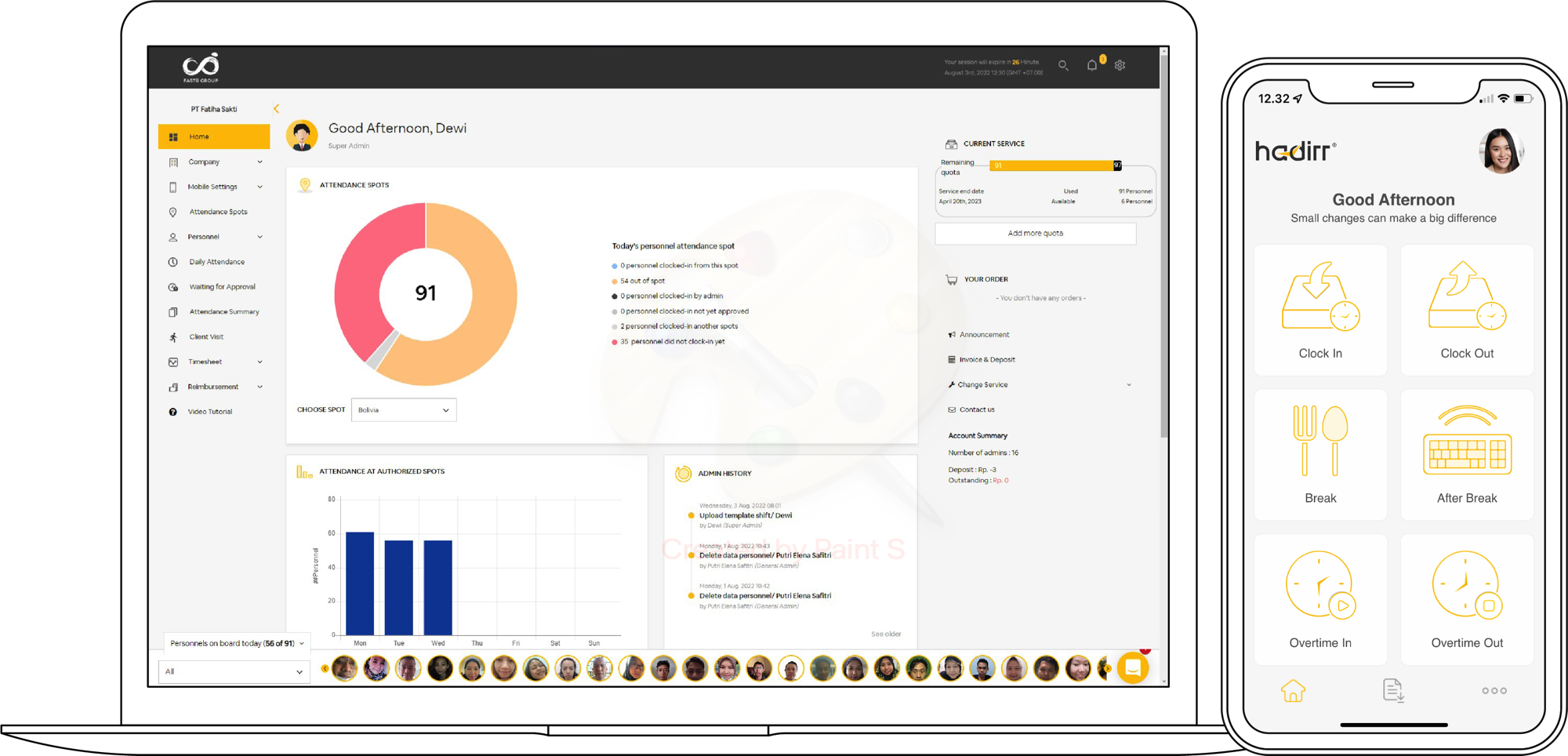
The absent worker’s shift gap appears on the dashboard immediately. The supervisor filters available replacements by shift eligibility and accumulated weekly hours—in real time, before making a single phone call. One worker has capacity without hitting overtime thresholds. The substitution request goes out through the app. The replacement confirms in two minutes. The roster updates automatically. Everyone on the team sees the current version. No outdated Excel file circulates through WhatsApp.
From Clock-In to Verified Attendance
When the replacement arrives at the facility in Karawang, they clock in through the Hadirr mobile app. GPS geofencing confirms they’re at the right location. Facial recognition confirms they’re the right person—not a colleague clocking in on their behalf. The record timestamps automatically. The proxy clock-in risk that rotating shift operations routinely face is closed before the shift even starts.
For workers without personal smartphones—more common in Indonesian manufacturing and logistics operations than regional HQ teams typically expect—Hadirr’s Lend App closes the gap. The worker borrows a colleague’s device. Facial recognition ties the attendance record to their identity, not the device. The data flows to the admin dashboard in real time.
From Overtime to Controlled Shift Coverage
The substitution triggers an overtime request. The approval workflow routes it to the manager before the hours are worked—not after. The manager sees the worker’s accumulated hours for the week alongside the request. They approve. The overtime is logged automatically—timestamped and approver-documented—ready for the Manpower Office, the Malaysian Labour Department, or Singapore’s MOM without any additional preparation.
By the time the shift ends, the timesheet has already been updated. Payroll receives clean, verified data. The compliance record exists. Nobody spends forty minutes on the phone. Nobody creates an undocumented verbal agreement. And nobody spends two weeks reconstructing chat logs when the audit arrives.
That’s what the right shift scheduling software actually changes—not just the roster display, but the entire workflow from the moment something goes wrong to the moment payroll closes cleanly.
Hadirr is trusted by thousands of companies across Southeast Asia—manufacturing operations, logistics hubs, mining & minerals, F&B, and service businesses running multi-shift schedules across distributed locations.
Shift Scheduling Software That Keeps Operations Running When Things Break

The 11 pm WhatsApp message will always arrive. Last-minute absences happen in every operation, in every country, at every scale.
The difference between an operations team with the right shift scheduling software and one without isn’t whether absences happen. It’s what happens next. A three-minute substitution workflow or a forty-minute scramble. A verified attendance record or a reconstructed chat log. An overtime approval trail or a payroll dispute six months later.
Rotating shift operations in Southeast Asia come with real regulatory complexity across three labor frameworks. They run in environments where connectivity is variable and workers don’t always have access to personal devices. They scale in ways that make manual scheduling unsustainable—fast.
The right shift scheduling software doesn’t remove that complexity. It gives operations teams control over it—automating the routine while keeping every exception visible, documented, and compliant.
The question is whether your system is ready when it does.
Most operations teams don’t lose money in one big moment. They lose it quietly—through inefficient shifts, untracked overtime, and scheduling decisions that don’t hold up under pressure.
Stop managing shifts through WhatsApp. Give your operations team a scheduling system that actually holds up when things change.
Try Hadirr free and give your team a calmer way to manage rotating shifts—starting today.