
Best Employee App in Malaysia That Works for Employers and Workers
A warehouse supervisor in Klang told his manager something worth writing down. He said the best thing about their new employee app Malaysia was not the GPS tracking or the shift notifications. It was that payroll had not got his overtime wrong in six months.
Before the app, he spent the last week of every month doing the same thing. Checking his calculations against payroll. Finding discrepancies. Arguing with HR about which hours counted. Losing some arguments. Winning others. Resenting all of them.
The app ended that entirely. His hours logged automatically, his overtime was routed through approval before it was worked, and his timesheet existed before he had to ask for it. Nobody disputed his numbers anymore because the numbers came from a system, not from someone’s memory.
That is what a good employee app Malaysia businesses should aspire to build. Not just a tool that helps managers manage. A tool that makes employees feel fairly treated, clearly informed, and protected when disputes arise.
Why Most Employee Apps in Malaysia Get Rejected by the People Meant to Use Them
Research from SHRM shows that 62% of frontline workers report limited computer access during work hours. This means the apps Malaysian businesses deploy must work on phones, in the field, between shifts, and in the gaps between tasks. Apps that fail this test do not just go unused. They actively damage trust between management and staff.
The rejection pattern looks predictable across Malaysian industries. Management buys an app. IT sets it up. HR announces it in a group chat. Staff download it. Two weeks later, adoption sits at 30%. A month later, the WhatsApp group is back to doing what it always did.
The reason is almost never the technology. The reason is that the app was designed entirely from the manager’s perspective. What does management need to see? Which reports does HR need to generate? How does the system meet compliance requirements?
Nobody asked what the employee gets from using the app. Nobody explained to the person clocking in at 6 am in a warehouse in Shah Alam how the app would make their working life better.
Mobile employee app Malaysia tools that achieve genuine adoption solve both sides of this problem simultaneously. They give managers the visibility they need. They give employees something tangible in return: clarity about their schedules, transparency about their hours, and protection when payroll disputes occur.
Also read: 5 Best Shift Management Software for SMEs in Malaysia 2026
What Malaysian Employees Actually Want From a Workplace App

The answer is simpler than most employers expect.
Malaysian employees want three things from an employee app Malaysia tool. They want to know their schedule before the last minute. They want to know their hours are recorded accurately. And they want their overtime approved before they work it, not disputed after.
These three wants align perfectly with what good employers already want to provide. Clear rosters reduce no-shows and late arrivals. Accurate time records reduce payroll errors and disputes. Pre-approved overtime controls labour costs and prevents Employment Act breaches.
The right employee app does not create a compromise between employee interests and employer interests. It serves both at once.
Attendance app for employees Malaysia tools that achieve this alignment see something most HR managers never expect: employees remind each other to use the app correctly. The warehouse worker who tells the new starter “make sure you clock out properly or your overtime won’t count” is not a management compliance enforcer. The worker is protecting their own interests, which happen to align with the employer’s interests too.
The global workforce management market is projected to reach USD 119.74 billion by 2032, growing at 10.20% CAGR, driven largely by mobile-enabled tools that serve both management and employee needs simultaneously.
Also read: Employee Digital Timesheets for Accurate Working Hours Tracking
The Employee App Features That Build Trust, Not Resentment
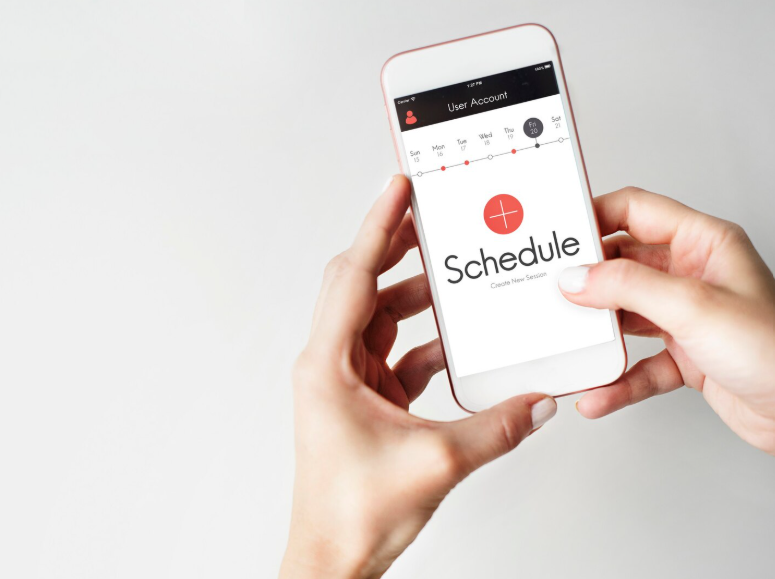
Five features determine whether an employee scheduling app Malaysia businesses deploy gets embraced or ignored.
Shift schedules that arrive before the week starts
Uncertainty about schedules is one of the most consistent sources of friction in Malaysian shift-based workforces. Staff in F&B, retail, and healthcare plan their personal lives around work rosters. When rosters arrive late, via WhatsApp, in formats that change multiple times, it signals that management does not respect their time outside work.
An employee app Malaysia that pushes confirmed shift schedules to every team member’s phone at least three days in advance builds a different kind of relationship. Employees plan their lives. They show up prepared. They feel that the organisation treats their time as worth planning for.
Clock-in records employees can see
Most employees have no way to verify that the attendance record the system holds matches what they actually worked. They discover discrepancies at payroll time, when the dispute is hardest to resolve.
A staff management app Malaysia that lets employees view their own clock-in history, break records, and overtime approvals in real time eliminates this black box entirely. The employee who can check their own record at any point is the employee who trusts the payroll output at month end.
Overtime that gets approved before it happens
The most common source of payroll disputes in Malaysian SMEs is overtime. Not fraud. Not malice. Just different records: the employee’s memory versus the system’s records. A workforce app Malaysia that routes every overtime request through a digital approval workflow, timestamped and visible to both parties, ends this class of dispute entirely.
The employee has proof of what was approved. The employer has proof of what was authorised. Neither party needs to argue about what was agreed.
Notifications that give employees what they need to know
Malaysian employees do not want more notifications. They want the right ones. Their shift has changed, their overtime request was approved, and their timesheet is ready for review.
Team management app Malaysia tools that push relevant, actionable notifications rather than generic platform alerts see significantly higher engagement from employees who would otherwise ignore the app entirely.
Automatic timesheets
Month-end timesheet submission is the HR task employees hate most consistently. They have to reconstruct a month of work from memory, chat logs, and paper records. They know their reconstruction is imperfect. However, they have to submit it anyway.
An employee time tracking app Malaysia that generates the timesheet automatically from verified attendance data removes this burden entirely. The employee does not have to remember anything. The record exists because they used the app correctly throughout the month. The timesheet is a reward for good adoption, not an additional burden on top of it.
Also read: Field Sales App: Improve Adoption, Visibility, and Team Performance
How Hadirr Works as an Employee App for Malaysian Teams

Hadirr works from both sides of the employment relationship simultaneously. Management gains visibility. Employees gain fairness and clarity.
Here is what the experience looks like from the employee’s perspective.
The Employee Experience Step by Step
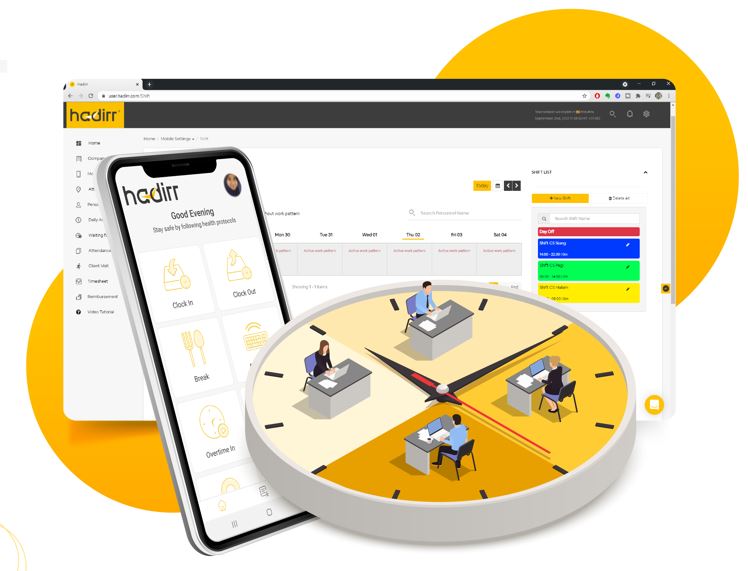
Clocking in takes eight seconds. When the Hadirr attendance app opens, GPS confirms the location, liveness detection confirms the face, and the clock-in records automatically. No queue at a fingerprint machine, no WhatsApp message to a supervisor, and no paper form to fill. Eight seconds, then back to work.
The shift for the week appeared on the phone three days earlier. The employee knew exactly when to arrive and when they were expected to leave. No surprises. No last-minute messages changing everything.
When extra hours are needed, the employee submits an overtime request through the app. The supervisor approves it within minutes. The employee has a timestamped record that the overtime was authorised. At month end, the dispute that used to happen every third month simply does not occur. The record is clear. The approval exists. The calculation runs automatically.
Built for Every Type of Workforce
For employees who do not own a personal smartphone, Hadirr’s Lend App feature lets them use a shared device at the counter or workstation. Liveness detection ensures the record stays accurate regardless of which device processes the clock-in. The employee without a smartphone gets the same accurate record as everyone else.
For field employees, shift management distributes rosters automatically and notifies staff of changes in real time. The field rep knows their day’s schedule before they leave home. They know when a substitution has been assigned and what location they need to cover.
At month end, the timesheet generates automatically from the verified attendance, overtime, and break records accumulated throughout the month. The employee does not submit anything manually. The record already exists, accurate and complete, from the daily app usage that happened naturally as part of the working day.
This is what makes Hadirr an employee app Malaysia teams actually want to use. Not because management made it mandatory. Using it correctly means never arguing about overtime, never questioning whether the hours recorded match the hours worked, and never spending thirty minutes on a Sunday night trying to reconstruct a month of work history from chat logs.
Also read: Sales Geofencing Malaysia to Prevent Fake Check-ins
When the Right App Makes Everyone’s Job Easier
The employee app debate in Malaysian SMEs often frames itself as a tension: management wants control, employees want privacy. The right app resolves this tension rather than deepening it.
An employee app Malaysia businesses build their operations around creates a shared source of truth. The supervisor who approved the overtime sees the same record as the employee who worked it. Managers work from the same schedules their staff receive. HR processes payroll using the same verified timesheets employees can review.
When everyone sees the same verified data, disputes about what happened become almost impossible to sustain. The energy that used to go into monthly arguments about hours and overtime goes into the actual work instead.
Organisations that build effective mobile workforce management see $17,000 to $34,000 in annual savings per frontline employee through improved retention, productivity gains, and reduced compliance risks. The savings come not just from operational efficiency. They come from the reduction in friction, resentment, and turnover that follows when employees feel fairly treated by the tools their employer uses.
The warehouse supervisor in Klang did not care about management dashboards. He cared about his overtime being right. The app that got his overtime right earned his trust in everything else it did.
Explore Hadirr’s employee management features and give your team an app that works for them as much as it works for you.