

Location Based Attendance System for Hybrid Teams in Malaysia
There’s a fingerprint machine bolted to the wall at the entrance of a logistics company’s office in Shah Alam. It cost RM 800 five years ago. It works perfectly. The problem: 14 of the company’s 22 employees haven’t walked past it in eight months. A location based attendance system wasn’t on the owner’s radar when she bought that fingerprint machine.
Back then, the whole team reported to the same office every morning. Today, six employees work from client sites across Selangor, four run field operations in Negeri Sembilan, and four more split their time between the Shah Alam office and a second facility in Klang. The fingerprint machine tracks the eight people who still come to the office. For the other 14, attendance is still managed through WhatsApp check-ins and a shared Google Sheet that nobody fully trusts.
This is the quiet mismatch at the centre of Malaysian workforce management in 2026: attendance infrastructure built for one way of working, deployed on a workforce that operates completely differently.
Why Traditional Attendance Systems No Longer Fit Malaysian Workforces
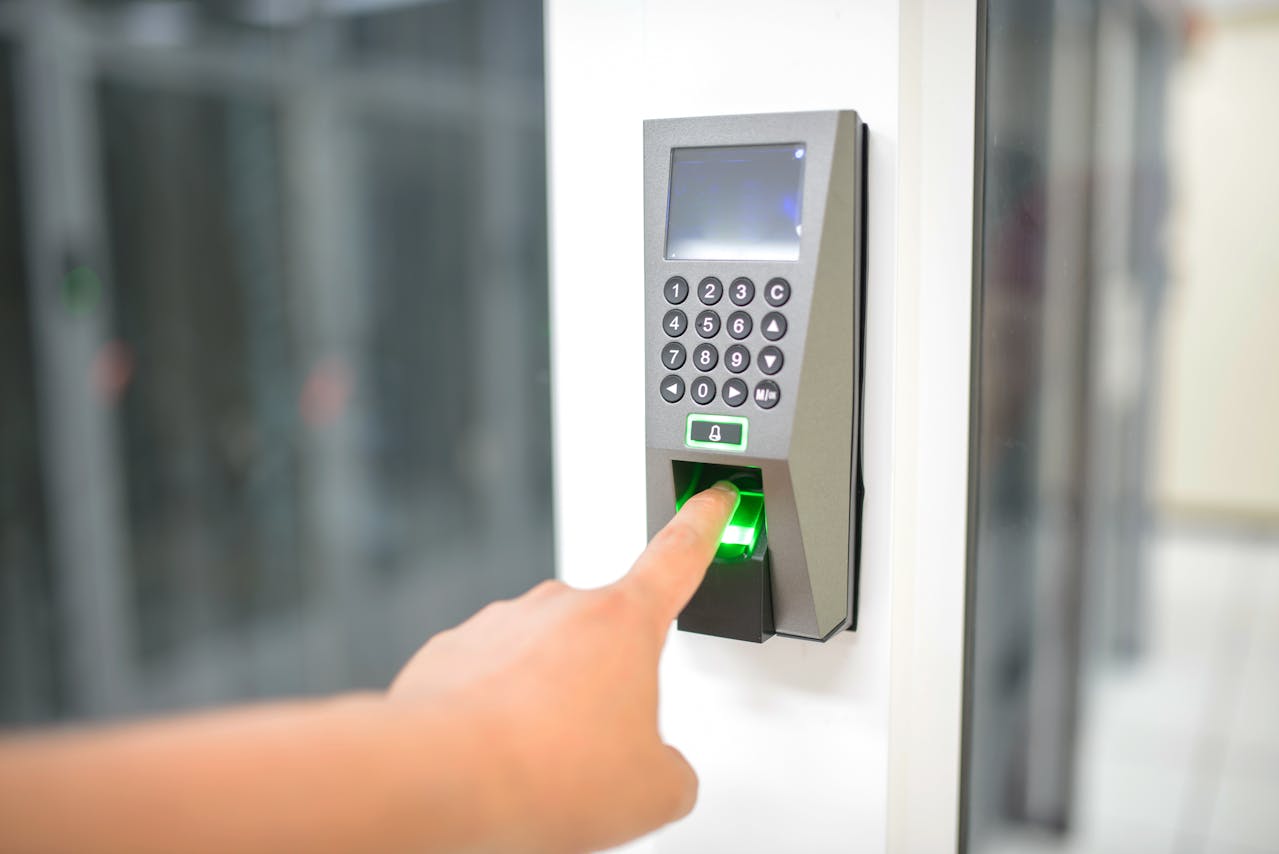
The fingerprint machine was the right solution for its era. Fixed location, fixed workforce, predictable patterns. Clock in at the door, clock out at the door, reconcile at month end. Clean and simple.
Malaysian workforces have moved on. The fingerprint machine hasn’t.
A location based attendance system addresses what fingerprint and card-based systems structurally cannot: a workforce that doesn’t converge on one physical location every day. Field sales teams covering territories from Johor Bahru to Kota Bharu. Healthcare staff rotating across clinic branches in Penang. Retail employees split between flagship stores and pop-up locations. Construction supervisors moving between project sites in Selangor and Pahang.
For these teams, the fingerprint machine is not just inconvenient. It’s architecturally wrong. It assumes presence at a fixed point as the definition of attendance. Mobile workforces define attendance differently: being at the right location, at the right time, doing the right work. A GPS-based attendance system captures that definition. A fingerprint machine at HQ cannot.
The shift away from fixed attendance infrastructure is accelerating in Malaysia. Hybrid work normalised the expectation of location flexibility. SME workforce structures have become more distributed as businesses expand beyond their original locations. And the cost of maintaining fingerprint machines, including hardware, maintenance, and the IT overhead of on-premise systems, compares unfavourably against cloud-based mobile attendance apps that require no physical infrastructure at all.
The question for Malaysian business owners is no longer whether to move to location-based attendance. It’s when, and what to look for when they do.
Also read: Multi-Site Attendance Tracking Software for HR Teams in SEA
How a Location Based Attendance System Actually Works

Most HR managers have a general sense of what GPS attendance means: employees clock in from their phones, and the system records their location. The mechanics underneath that simple description are worth understanding, because they determine how reliable the system actually is.
Geofencing: the boundary that defines “present”
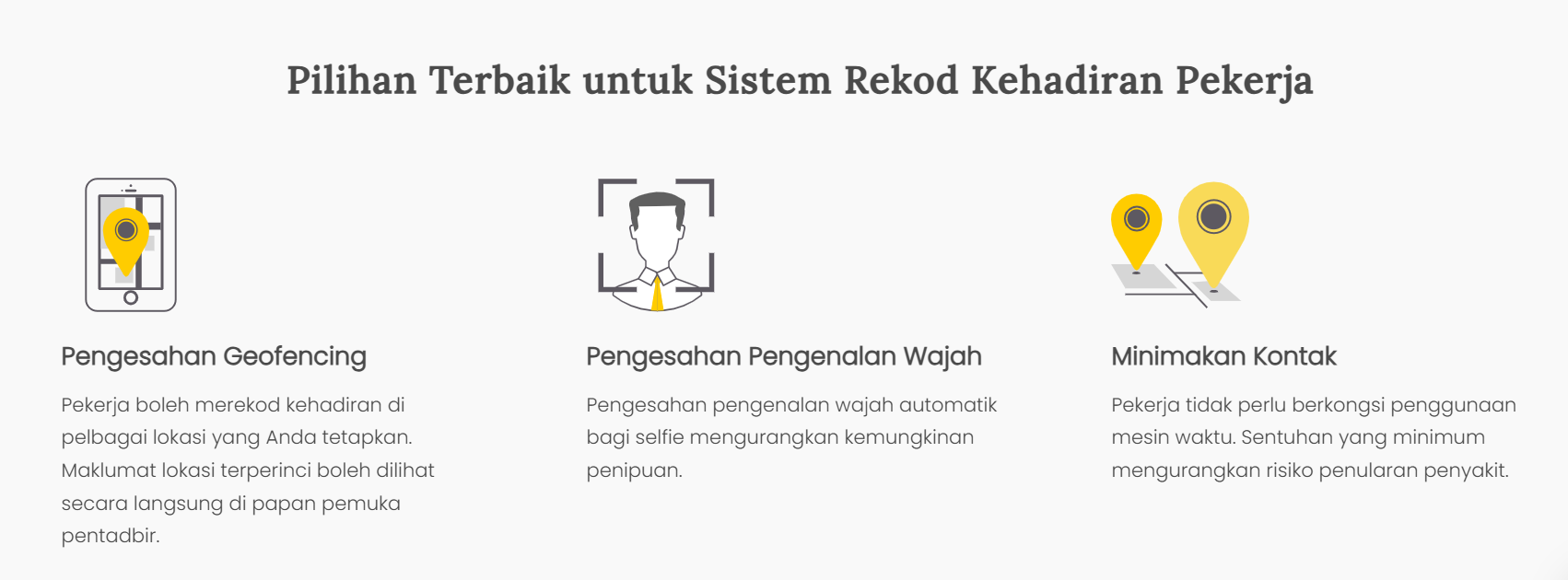
A geofence is a virtual perimeter drawn around a physical location. The business defines the boundary. It might surround an office building, a client site, a warehouse, or a retail outlet. When an employee’s device enters that boundary, the system registers their presence. When they leave, it registers their departure.
For a Malaysian company with multiple locations, dozens of geofences can run simultaneously. The Klang warehouse has its own boundary. The Shah Alam office has its own boundary. A client site in Cyberjaya that field staff visit regularly gets its own boundary. Each employee clocks in and out within the boundaries relevant to their role, and HQ sees all of it on one dashboard.
The radius matters. Too wide, and an employee can clock in from a mamak stall across the street. Too narrow, and GPS drift in dense urban areas like KL creates false rejections. Well-configured systems set boundaries that balance accuracy with real-world signal variability, typically between 20 and 100 metres depending on the location type.
Facial recognition: confirming who, not just where
GPS geofencing confirms that a device is within the approved zone. It doesn’t confirm that the right person is holding the device. Facial recognition adds the identity verification layer. The employee takes a selfie at clock-in, and the system matches it against their registered profile before accepting the record.
This combination, location verified by GPS and identity verified by facial recognition, closes the two most common attendance fraud vectors simultaneously. An employee cannot clock in from the wrong location. A colleague cannot clock in on their behalf.
Under Malaysia’s PDPA 2024 amendments, facial recognition data qualifies as biometric personal data, a sensitive category requiring explicit consent and proportionate processing. The right digital attendance system Malaysia businesses deploy handles this with proper consent workflows built into the onboarding process, not added as an afterthought.
Offline sync: for when connectivity drops
Field workers in industrial areas, construction sites in Pahang, or retail staff in basement-level outlets sometimes lose 4G signal at the moment they need to clock in. A location based attendance system that requires continuous connectivity generates data gaps in exactly these situations.
Offline-capable systems log the clock-in locally when connectivity is unavailable and sync automatically when the signal returns. The timestamp reflects when the employee actually clocked in, not when the data reached the server. For Malaysian businesses with operations outside Klang Valley, this capability is the difference between a complete attendance record and one full of unexplained gaps.
Cloud-based dashboard: real-time visibility from anywhere
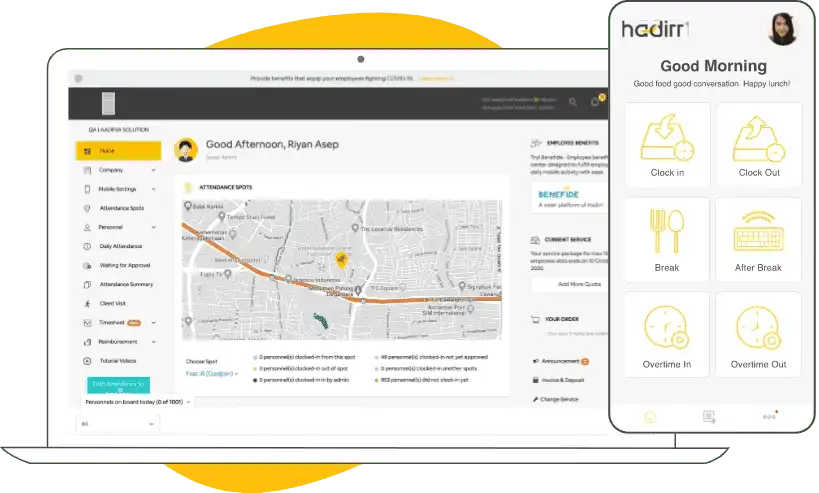
Every clock-in, clock-out, break, and location record flows immediately to a cloud-based admin dashboard. Managers see attendance status across the entire team in real time, whether they’re sitting in HQ or reviewing data from a coffee shop in Bangsar. Reports generate automatically. Monthly summaries don’t require manual compilation.
Also read: Sales Geofencing Malaysia to Prevent Fake Check-ins
What a Location Based Attendance System Solves for Malaysian Businesses

Three specific problems that fingerprint machines and WhatsApp check-ins cannot solve, and that location-based attendance addresses directly.
The remote worker visibility gap
When employees work from client sites, home, or distributed locations, managers have no reliable way to confirm attendance through traditional systems. WhatsApp check-ins are self-reported and unverifiable. A GPS attendance system that Malaysian businesses use for remote and hybrid teams generates verified, timestamped records from wherever employees are working, with location confirmation that nobody can fake without actually being there.
For Malaysian companies managing hybrid teams post-pandemic, this closes the visibility gap that makes remote work feel like a management risk. Attendance becomes verifiable regardless of where work happens.
The multi-site coordination problem
A business with three locations running three separate attendance systems or worse, three separate paper registers, cannot consolidate attendance data without significant manual effort. A single location based attendance system covers all sites simultaneously. HQ sees every location’s attendance on one screen. Payroll processes from one data source. The monthly reconciliation that used to take days takes minutes.
For Malaysian business owners managing multiple outlets, this consolidation is where the ROI becomes immediately obvious.
The late arrival and break-time accountability gap
Manual attendance systems record presence, not punctuality. A fingerprint machine that logs an 8.47 am arrival alongside an 8.00 am scheduled start creates a data point but only if someone reviews it and acts on it. A digital attendance system Malaysia managers use with automated alerts surfaces late arrivals, extended breaks, and early departures immediately, without requiring a manager to audit records manually.
Over time, this visibility changes behaviour. Employees who know their clock-in time is recorded accurately and reviewed in real time develop different attendance habits than employees who know their manager checks the paper register once a week.
Also read: Field Sales Software for Malaysian SMEs: Stop Guessing, Start Tracking
Choosing the Right Location Based Attendance System for Your Malaysian Team

Five diagnostic questions that separate systems worth implementing from systems that create new problems.
Does it work offline?
If any of your employees work in locations with unreliable connectivity, offline capability is non-negotiable. In Malaysia, that includes construction sites, industrial estates, and many locations outside major urban centres. Ask specifically: does the system log locally and sync later, or does it require live connectivity to record a clock-in?
How does it handle biometric data under PDPA?
Malaysia’s updated PDPA classifies facial recognition data as sensitive personal data. The system you choose must include structured consent flows, clear data retention policies, and access controls that limit who can view biometric records. If a vendor cannot explain their PDPA compliance approach clearly, that’s a red flag regardless of how good the rest of the feature set looks.
Can it manage multiple geofences simultaneously?
A single-location business needs one geofence. A business with three outlets, two client sites, and a warehouse needs at least six. Confirm that the system allows unlimited or high-volume geofence configuration, and that adding new locations doesn’t require a call to the vendor’s support team.
Does it integrate with payroll?
Attendance data that doesn’t flow into payroll creates a manual reconciliation step that defeats much of the time-saving purpose of digital attendance. Confirm what integration options exist for Malaysian payroll systems, and whether the timesheet output format matches what your payroll process requires.
Is the mobile app actually usable by your workforce?
The most technically capable attendance app fails if field workers find it confusing or slow. Request a trial that involves actual employees from your team, not just an admin demo. An attendance app for field workers Malaysia teams will actually use needs to be fast, simple, and functional on mid-range Android devices that represent most of the Malaysian workforce’s actual hardware.
Also read: Attendance Software for Small Business: Avoid Costly HR Risks
How Hadirr’s Location Based Attendance System Works for Malaysian Teams

Rather than walking through a feature list, here’s what changes when a Malaysian business implements Hadirr across the first day, the first week, and the first month.
Day One: The Setup That Doesn’t Require an IT Team
Hadirr deploys location-based attendance without requiring on-premise hardware. The admin configures geofences for every relevant location, including office, warehouse, client sites, branch outlets, directly from the web dashboard. Employees download the mobile app and complete a one-time facial recognition registration. The whole setup for a twenty-person team takes a few hours, not a few days.
From day one, every clock-in carries a GPS-verified location and a facial recognition confirmation. The paper register, the fingerprint machine queue, and the WhatsApp check-in group are no longer needed. Attendance data appears on the admin dashboard in real time across every location simultaneously.
For employees without reliable personal smartphones, Hadirr allows clock-in through a colleague’s device using the Lend App feature. Facial recognition ties the record to the correct employee regardless of which device was used. No employee falls through the gap because of a hardware limitation.
Week One: The Patterns That Surface Immediately
Within the first week, previously hidden patterns start to surface: employees who consistently clock in five to ten minutes late, locations with frequent extended breaks, and field workers who fall outside expected site visit windows.
None of this requires a manager to audit records manually. Hadirr’s real-time dashboard surfaces anomalies automatically. Late arrivals flag on the same day they happen, not at month end when the payroll run makes retroactive corrections impossible.
For Malaysian businesses managing shift workers, centralised shift scheduling becomes operational in week one. Shift rosters are assigned to individuals or groups from the central dashboard. Employees see their schedules on the mobile app. When shift substitutions are needed, the supervisor assigns replacements with real-time visibility into each worker’s current hours, preventing inadvertent overtime before it happens.
Month One: The Timesheet That Writes Itself
At month end, the timesheet is already complete. Hadirr generates it automatically from verified attendance records, approved break times, and confirmed overtime, without anyone having to compile it from chat messages, paper records, or memory.
Overtime management through Hadirr routes every overtime request through a digital approval workflow during the month. Every approved session carries a timestamp and approver identity. The output that flows to payroll is verified data, not estimated.
For Malaysian SMEs where the monthly payroll preparation previously consumed two to three days of HR time, this automatic timesheet generation is where the time saving becomes tangible. The online timesheet system produces a document that satisfies payroll requirements and survives an Employment Act audit, generated from the same verified data that powered every attendance decision during the month.
Also read: Best Low-Cost CRM Solutions for Small Business in Malaysia
The Right System for the Way Your Team Actually Works
A location based attendance system isn’t an upgrade to a fingerprint machine. It’s a fundamentally different approach to what attendance means for a workforce that doesn’t stay in one place.
Malaysian businesses that make this shift early don’t just improve attendance accuracy. They recover management time lost to manual reconciliation, build payroll records that hold up under scrutiny, and gain visibility into workforce patterns that paper registers and WhatsApp check-ins never surfaced.
The fingerprint machine still works. It just doesn’t work for your team anymore. See what happens when attendance is built around how your workforce actually moves with Hadirr.